April 29, 2026 · 10 min read
The LinkedIn-first comms leader: a new B2B PR playbook
LinkedIn is now a media company with a social network attached. The comms function at most companies was designed for a very different world.
Garret Caudle, Founder, Influent

Short answer
LinkedIn is now a media channel with a social network attached. A LinkedIn-first comms leader publishes directly to the audience instead of pitching through press, and treats executive posts as the primary owned channel for narrative.
Key takeaways
- Content marketing and PR have collapsed into one workflow on LinkedIn.
- Build a bench of executive voices instead of relying only on the CEO.
- Treat Thought Leader Ads as precision media placement, not as a performance channel.
- Journalists and analysts now source stories on LinkedIn, so posting there is an earned media play.
- Comms teams should measure share of voice with target accounts, not press clippings alone.
In case you missed the last 5 years:
- LinkedIn now has 250 news editors recruited from Bloomberg, the Wall Street Journal, and Reuters.
- It operates a global editorial infrastructure that selects which practitioners appear alongside major news stories.
- Companies are now using LinkedIn as a breaking news distribution layer instead of issuing press releases.
- Reporters are using LinkedIn to identify thought leaders to feature in their stories.
LinkedIn has become, by any reasonable definition, a media company with a social network attached to it rather than the other way around.
Unfortunately, the comms function at most companies was designed, from top to bottom, for a VERY different world.
Content marketing and public relations have always operated as separate disciplines because they were separate activities. Content was publishing. PR was pitching. The teams were different, the skills were different, and the KPIs were different.
But on LinkedIn those two functions have converged into a single activity, because the content executives publish is what LinkedIn's editorial team evaluates for selection. The post is the pitch, the body of work is the credential, and the editorial placement is the earned media outcome.
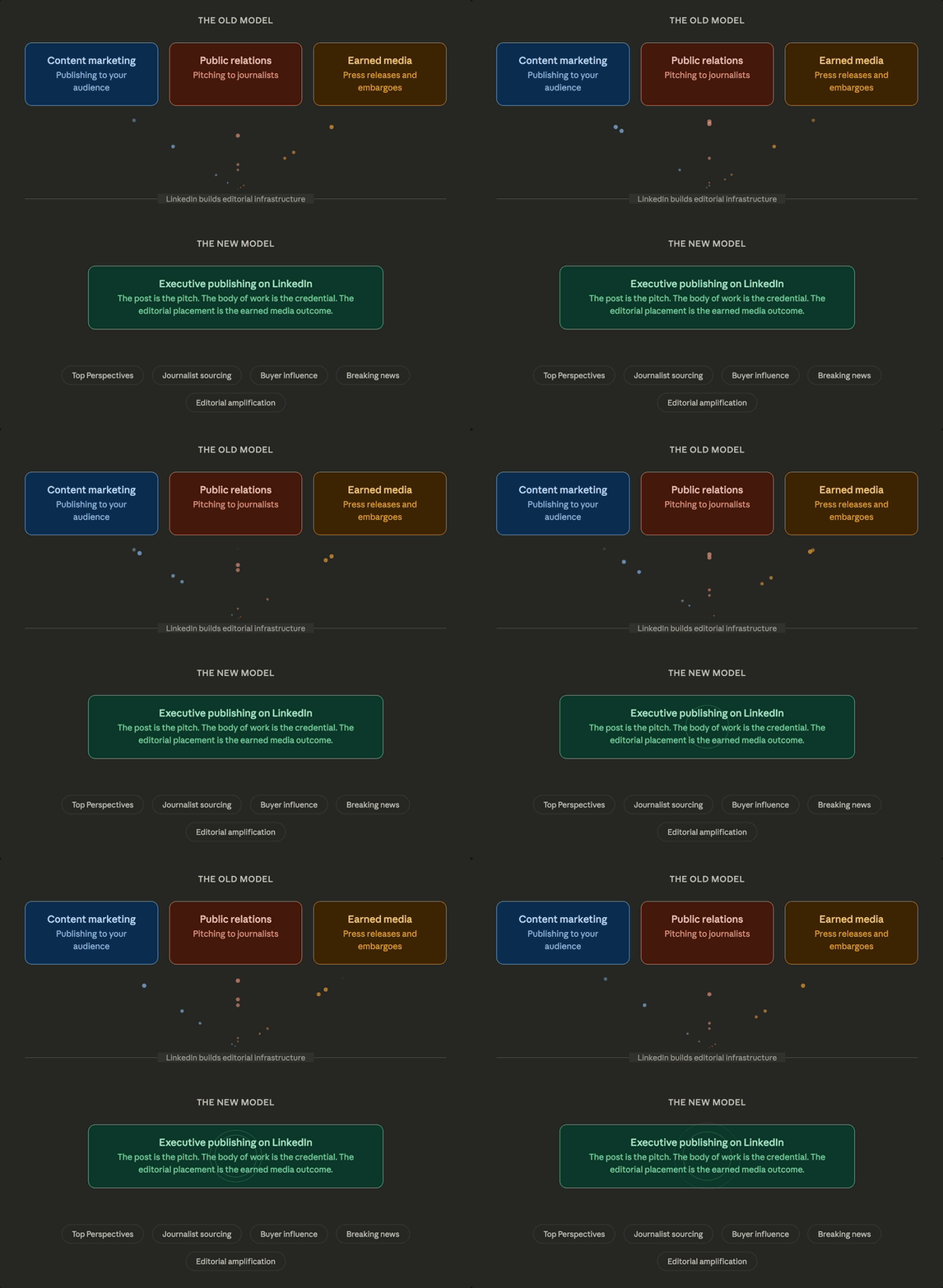
Most comms leaders have not reorganized around this. They are still running infrastructure designed for a media environment that no longer reflects how editorial selection, journalist sourcing, or buyer influence actually work on the platform where all three now happen.
It also helps to understand why executive posts stall in the first place, which comes down to LinkedIn distributing content through networks rather than interests.
So what would a LinkedIn-First comms leader look like?
If you run a communications team and you want to operate effectively on the platform where editorial selection, journalist sourcing, and buyer influence actually happen now, here are the seven things that define the role.
1. You study LinkedIn's editorial layer like you used to study beat reporters.
Look at Top Perspectives for your industry. Note the topics, the angles, and who gets selected. Pay attention to which formats get picked up, and which points of view get amplified versus ignored. Use that as the basis for your executive publishing cadence rather than defaulting to your existing content calendar. The comms leaders who treat LinkedIn's editorial infrastructure with the same rigor they once applied to media lists will outperform the ones who treat it as a social channel.
2. You build a bench of executives, not just your CEO.
Each executive or subject matter expert publishing credibly on the platform is an additional entry point into LinkedIn's editorial layer, journalist sourcing, and audience reach. Your CFO has a perspective on capital allocation that matters to a different audience than your CTO's perspective on infrastructure. Your VP of People has credibility on workforce topics that your CEO does not. Think in terms of a roster, not a single spokesperson.
3. You treat executive engagement as relationship building with the media.
Have your executives send connection requests to journalists, podcast hosts, and LinkedIn's editorial staff. When these people are connected to your executives, content appears in their feed organically, and every post functions as a passive pitch without requiring outreach. Commenting on posts from journalists, editors, and industry voices builds name recognition with the people who control editorial selection.
This is not a nice-to-have. It is the LinkedIn equivalent of the coffee meeting, the conference handshake, the "just wanted to put this on your radar" email. It is easier to earn attention from a network that already recognizes you, so build that familiarity continuously rather than scrambling when there is something to promote.
4. You use Thought Leader Ads as a precision media placement tool.
When an executive publishes something with news value, sponsor it as a TLA targeted to journalists and editors in your vertical. It appears as organic content in their feed rather than a press release in their inbox. This is one of the most underused capabilities in B2B communications. You can put an executive's point of view directly in front of the people who write about your industry, in a format that looks and feels like something they discovered on their own.
5. You merge content and PR into one function.
LinkedIn has made content marketing and PR the same activity. There is no separate pitching step. If your content and comms teams operate separately, they are fragmenting a single workflow. The brief that informs an executive's LinkedIn post is the same brief that should inform your media strategy, because the post is the media strategy.
6. You redirect budget toward executive publishing.
Press release distribution, media database subscriptions, and trade pub sponsorships should be evaluated against the cost of funding an executive publishing program on the platform where editorial selection actually happens. This does not mean those legacy channels are worthless. It means the ROI comparison has shifted, and most comms budgets have not shifted with it.
7. You measure what actually matters now.
Track editorial selection as a KPI, not just engagement. Measure whether executives are being pulled into Top Perspectives, LinkedIn News features, and editorial roundups. That is the earned media outcome on this platform. Impressions and likes are fine as secondary indicators, but they are not the thing.
And when it happens, repurpose it. When an executive gets selected for Top Perspectives or quoted by a journalist who found them on LinkedIn, share it, reference it in future content, and use it in sales materials. Each placement increases the likelihood of the next one.
The bottom line
The comms function was built for a world where a small number of gatekeepers decided which perspectives reached professional audiences. Those gatekeepers still exist, but most of them now do their selecting on LinkedIn. The comms leaders who reorganize around that reality first will own the earned media advantage for as long as everyone else keeps treating LinkedIn like a social channel.
For the marketing-side version of this same shift, see The LinkedIn-First CMO. For why LinkedIn is making the move at all, see the secret reason LinkedIn has games and news.
Questions
Frequently asked questions
- What is a LinkedIn-First comms leader?
- A communications leader who merges content marketing and PR into one function, studies LinkedIn's editorial layer the way they once studied beat reporters, and treats executive posts as both publishing and pitching.
- Should PR and content marketing be the same team?
- On LinkedIn they already are. The post is the pitch, the executive's body of work is the credential, and editorial pickup is the earned media outcome, so splitting the teams creates duplicate work and slower cycles.
A weekly newsletter is coming
Garret’s original thinking on attention, credibility and distribution. Email signup is being updated.
About the newsletterWork with us
Ready to dominate LinkedIn?
Influent builds and runs executive LinkedIn programs for category-leading B2B companies.