May 12, 2026 · 11 min read
Why LinkedIn has games: the news strategy behind it
LinkedIn's daily puzzles aren't a quirky engagement experiment. They're a signal that LinkedIn is quietly becoming the newspaper of professional news.
Garret Caudle, Founder, Influent

Short answer
LinkedIn's daily games exist to build a habit loop around professional news. The strategic read is that LinkedIn wants to be where professionals get their news, which raises the value of publishing timely, opinionated content there.
Key takeaways
- LinkedIn's games sit inside the News widget, mirroring how newspapers use puzzles to build a daily habit.
- LinkedIn employs more than 250 editors and partners with 400+ publishers.
- Treat LinkedIn as an earned media channel with human editors, not only as a social feed.
- News-attached posts can reach far beyond a normal post because editors amplify timely commentary.
- Executives can break news directly on LinkedIn and have major outlets pick it up, as Nasdaq's Tal Cohen did.
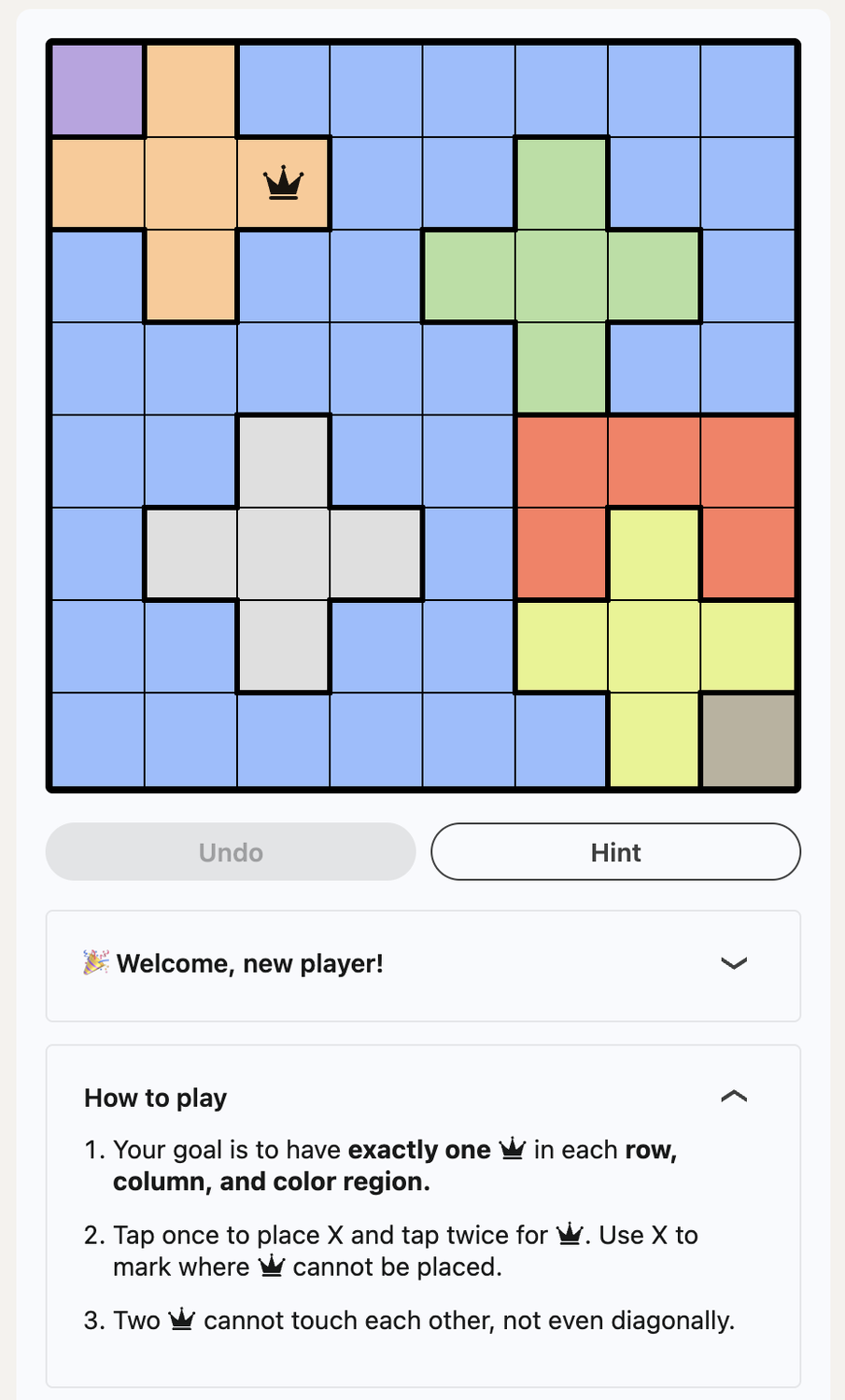
LinkedIn launched six daily puzzle games in 2024: Pinpoint, CrossClimb, Tango, Zip Mini, Sudoku, and Queens (my fave).
"LinkedIn built a news feature that overrides its own algorithm in favor of human editorial judgment. That's pretty wild."
You probably fall into one of two groups. Either you love these games and play them every day, or (more likely) you do not care whatsoever. That is totally fair. Why should you care? It is a bit strange that a professional networking platform would put time and resources into building a poor-man's Wordle. But let's be honest, LinkedIn is a pretty strange place.
Well, I am here to tell you that you SHOULD care. LinkedIn's investment into games signals an incredibly important shift in the future of marketing and public relations, and if you fail to pay attention to these signals, you will get left behind.
Grab my hand. Let's go down the rabbit hole.
What the hell do I know?
I am not a LinkedIn guru or course-bro. I do not want to sell you my expertise or convince you to download a fake "LinkedIn Algorithm Secrets" whitepaper.
I run a LinkedIn agency. We support 120 of the fastest-growing B2B companies in the world, and we are widely regarded as an industry leader in everything LinkedIn-related, from executive content to advertising to outbound.
What follows is based on my own experience and observations as well as privileged conversations I've had with experts in the space. Some of it may reframe something you thought you already understood.
Who has games? Newspapers have games.
You might look at LinkedIn's games as a straightforward way to increase engagement on the platform. In a lot of ways you'd be right. But look a little deeper and consider what LinkedIn's real strategy is here.
These are not digital games in the traditional sense, like addictinggames.com or those weird Mafia games your Grandpa got addicted to on Facebook. LinkedIn's games are newspaper games. Crosswords, sudoku, that sort of thing. Quick to play, somewhat addicting, and they reset each day.
Not only that, but LinkedIn's games appear inside the LinkedIn News widget, right below all of the daily headlines. Both decisions (the type of games they built and where they show up) are VERY intentional.
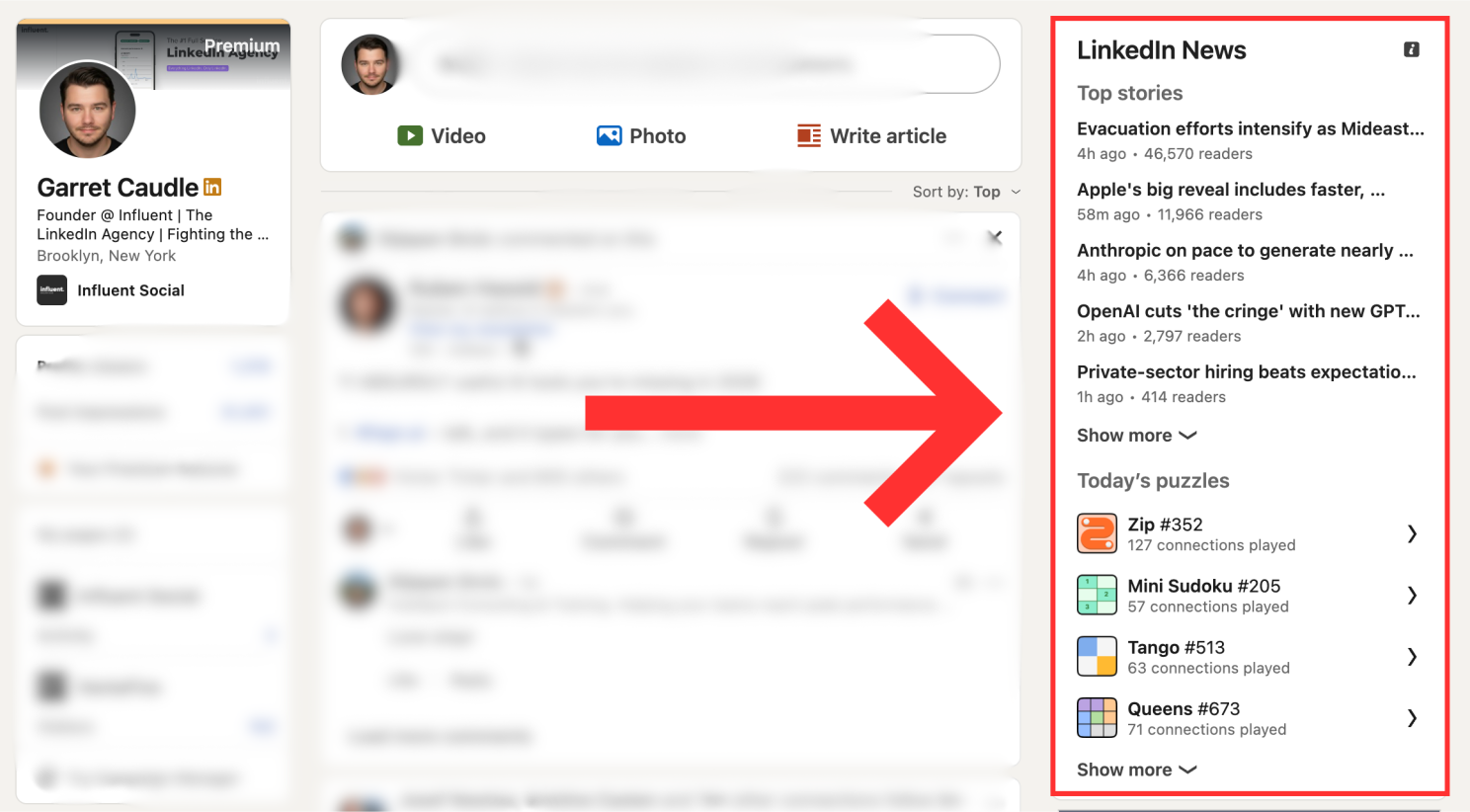
Exactly like the NYT or any other newspaper, LinkedIn wants you to log in first thing each morning with your cup of coffee, read the news headlines, and do your little puzzle. By having these games, LinkedIn is sending a pretty overt signal about how they view themselves and how they want YOU to view them.
As a newspaper.
Okay, so LinkedIn wants to be a newspaper?
Yes. Well, sort of. The 2026 version of one, at least.
Let me start by stating the obvious: the news industry is contracting. Local newspapers have lost two thirds of their journalists since 2005. The digital media companies that were supposed to replace them have gone through waves of layoffs and closures (RIP Buzzfeed circa-2014). The traditional infrastructure through which professional information reached professional audiences is shrinking, fragmenting, and in some verticals disappearing entirely.
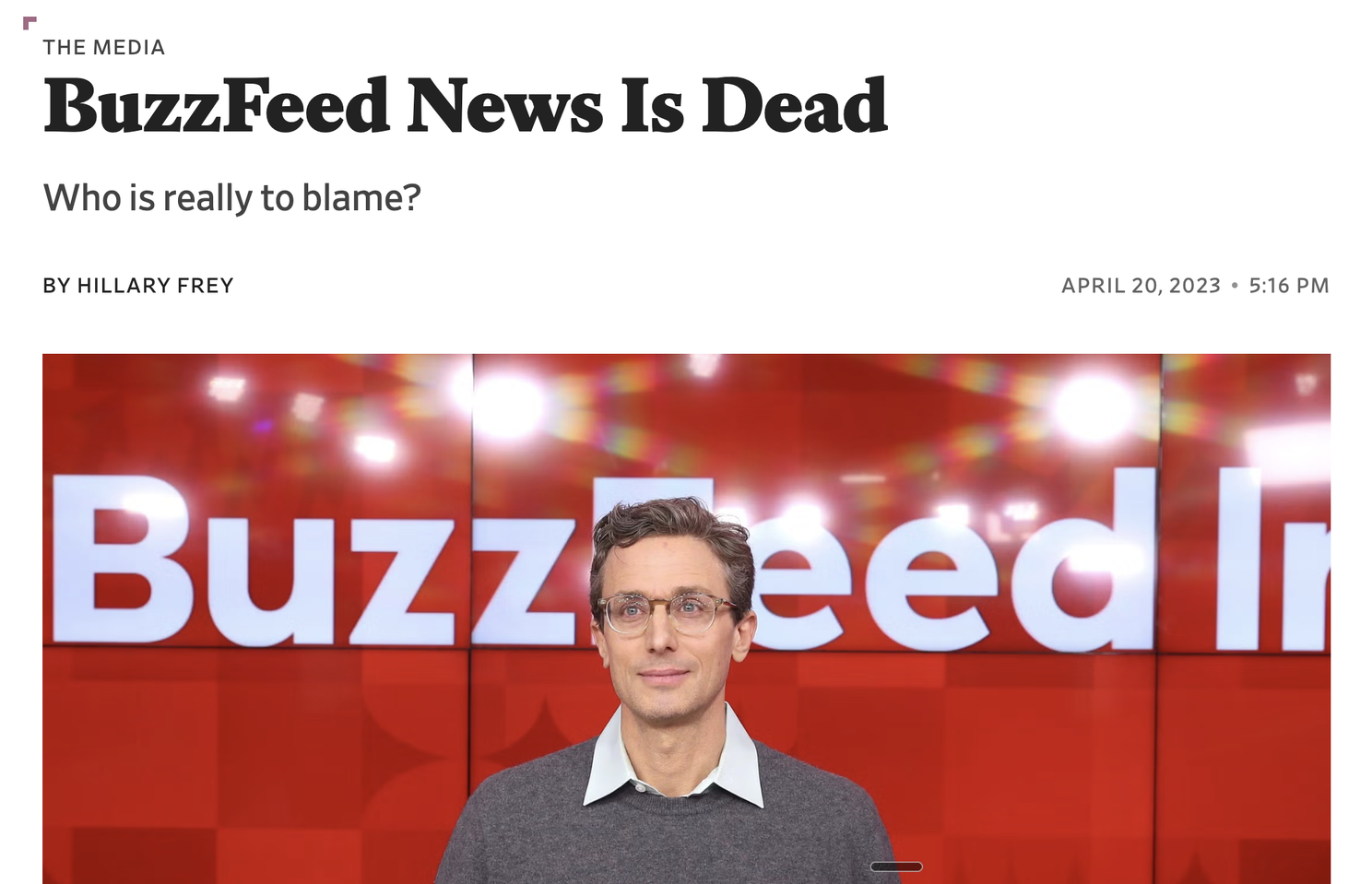
LinkedIn looked at that contraction and basically said, "we're becoming the defacto place where people get their professional and industry news, maybe we should double down on that?"
And so they did. Over the last five-ish years, LinkedIn has quietly signed partnerships with over 400 publishers, built a revenue model to make journalism financially viable on the platform, and grown its editorial team to more than 250 people recruited from Bloomberg, the Wall Street Journal, CNBC, and others.
LinkedIn is trying to become the place where professional news lives, at the exact moment that the traditional places where professional news used to live are becoming unable to sustain themselves. That has HUGE implications for the future of news, earned media, and B2B marketing as a whole.
That shift changes the job description for communications teams, which is the subject of The LinkedIn-First comms leader.
What exists today
Beyond games, let's look at what already exists in LinkedIn's editorial ecosystem. There's a lot, so if you want to skip ahead to the tactical "what to do next" stuff, I will not blame you.
On the platform
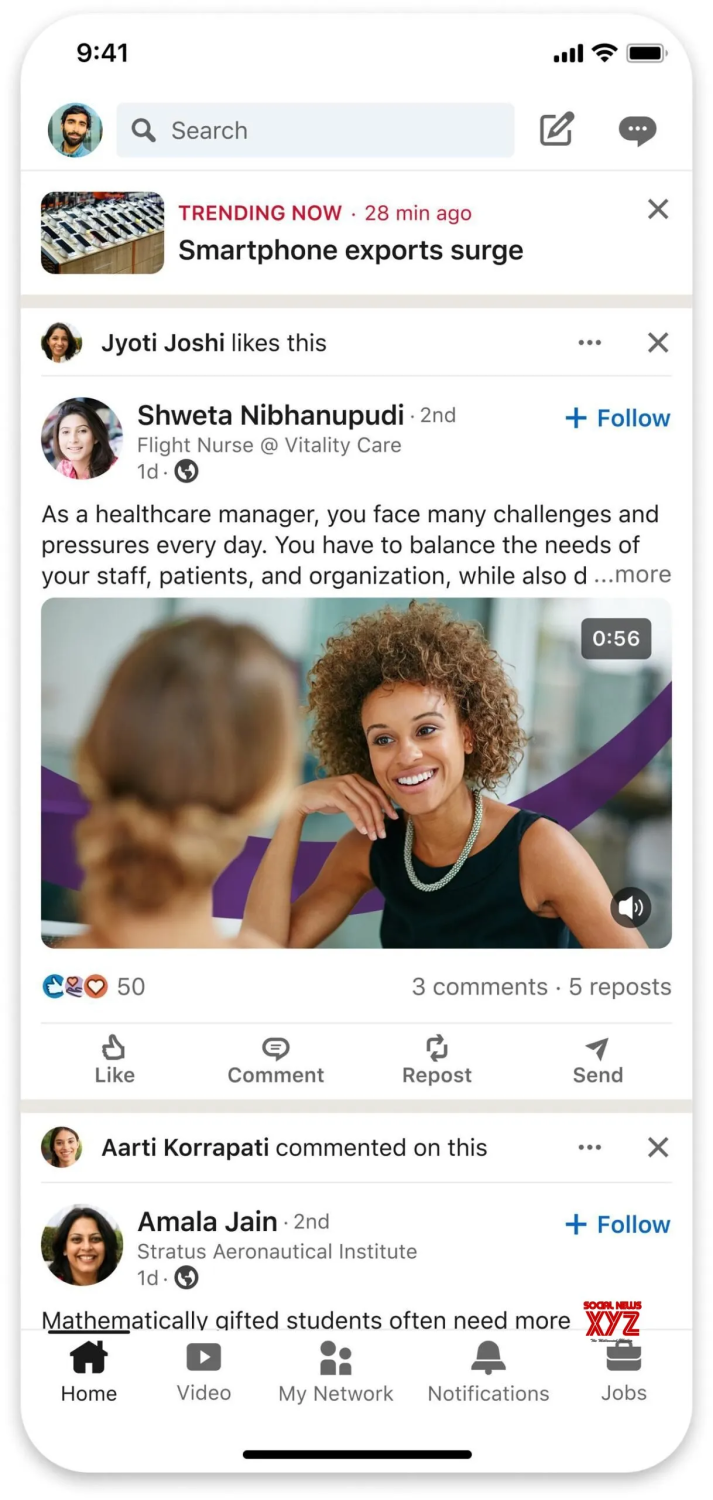
On desktop, the LinkedIn News widget lives on the right side with headlines at the top and daily games below. On mobile it appears beneath the search bar after a scroll. The news section runs about 10 stories at a time.
Each headline shows when it was published along with a real-time reader count across the entire platform. Some stories sit at a few thousand readers, others reach hundreds of thousands, occasionally millions.
Click into a headline and you land on a LinkedIn-hosted page, not an external article. Sometimes it is written entirely by a LinkedIn editor (a summary, an analysis, their take on what matters). Other times it is a few editorial sentences and a link out to the underlying piece.
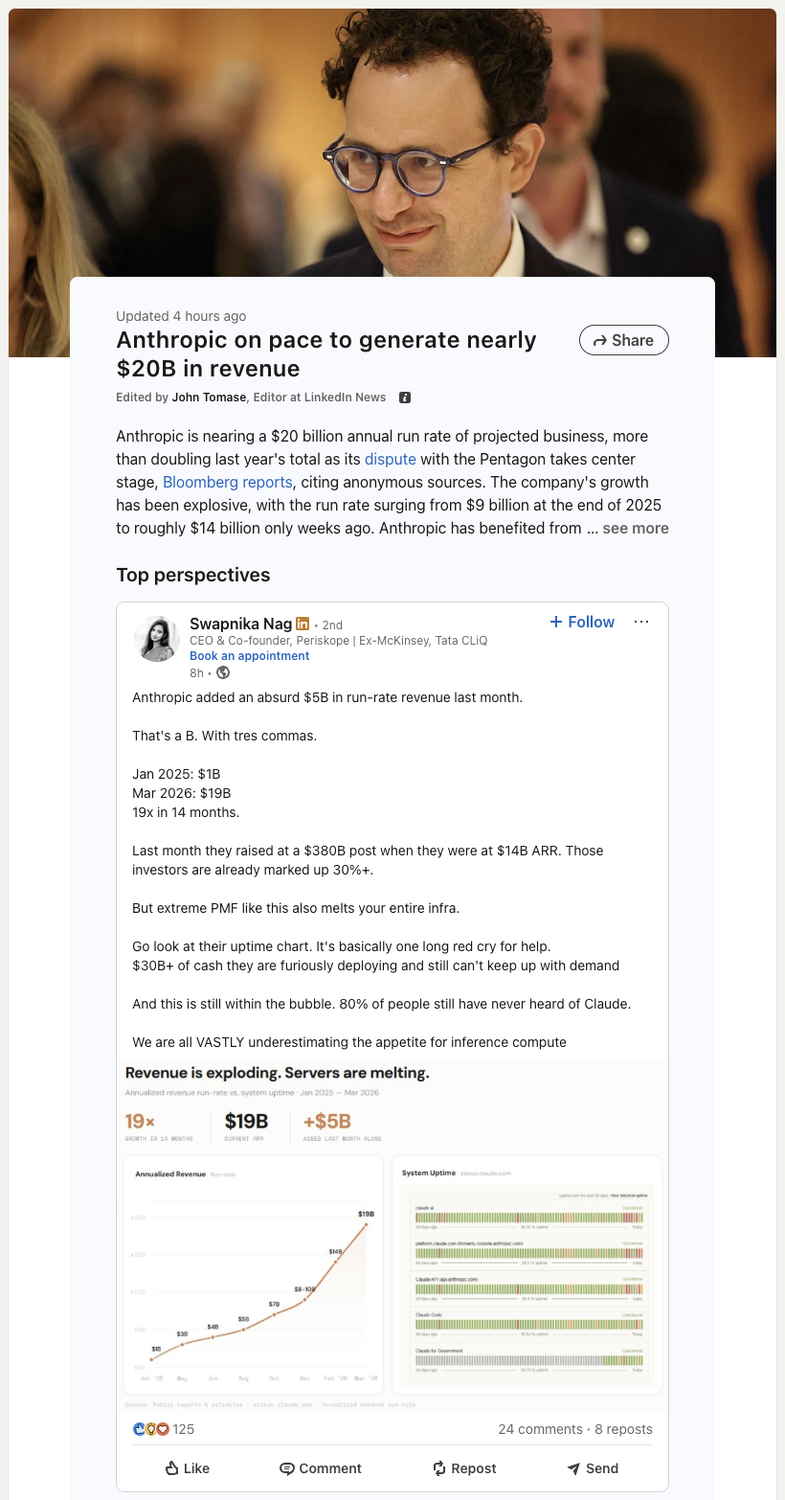
Scroll down on that page and you reach a section called Top Perspectives. These are posts from LinkedIn members (execs, journalists, industry experts) that the editorial team has manually selected as relevant to that story. They change throughout the day as editors add and remove posts.
The posts are not selected algorithmically and are not sorted by follower count. LinkedIn describes the selection criteria as "credibility, authenticity, and demonstrated expertise relative to the specific story." If that sounds like an editorial decision, much like a trade publication's editor makes every day, then you're starting to catch on.
There is also a News Banner that LinkedIn has been testing at the very top of the main feed, above the post feed entirely, that surfaces breaking stories curated by the editorial team in real time. It bypasses LinkedIn's own feed algorithm. Human-curated stories appear above everything else, regardless of what your network has been posting.
The editorial team
LinkedIn's editorial operation started in 2011 with four or five people curating links from third-party publishers. There are now more than 250 of them.
They operate across 190 countries in 8 languages, recruited from Bloomberg, the Wall Street Journal, CNBC, HuffPost, and Wired. There are dedicated vertical editors for finance, technology, careers, and retail, organized into regional newsrooms across North America, Europe, Asia, and Latin America.
For context: the Financial Times has roughly 600 journalists worldwide. The Independent runs about 170 across the UK and US. LinkedIn's editorial team is a legit newsroom.
Their model, which they call "Breaking Views" rather than breaking news, holds that on any significant industry development the most valuable coverage is not a reporter's reconstruction of events, but an aggregation of perspective from practitioners actually operating inside the space. The editorial team's job is to identify who has the relevant expertise, surface their posts, and package them alongside or in place of traditional news articles.
LinkedIn's own media channels
Beyond the widget and the curation work, LinkedIn runs its own editorial channels. LinkedIn staff, writing and producing content under LinkedIn's brand.
The LinkedIn News main page has 20 million followers, making it one of the most-followed company pages on the platform. Behind it sits a network of regional showcase pages (India, Europe, UK, Australia, Brazil, Germany, France, Japan, Latin America, the Gulf), each operated by a local editorial team. The India page alone reaches 43 million readers across 96 countries in 9 languages.
LinkedIn's editorial team also publishes its own newsletters and podcasts:
- The Finance Files covers finance and fintech
- Tech Stack decodes AI and tech trends for non-technical professionals
- Get Hired has 775,000 subscribers and a companion podcast
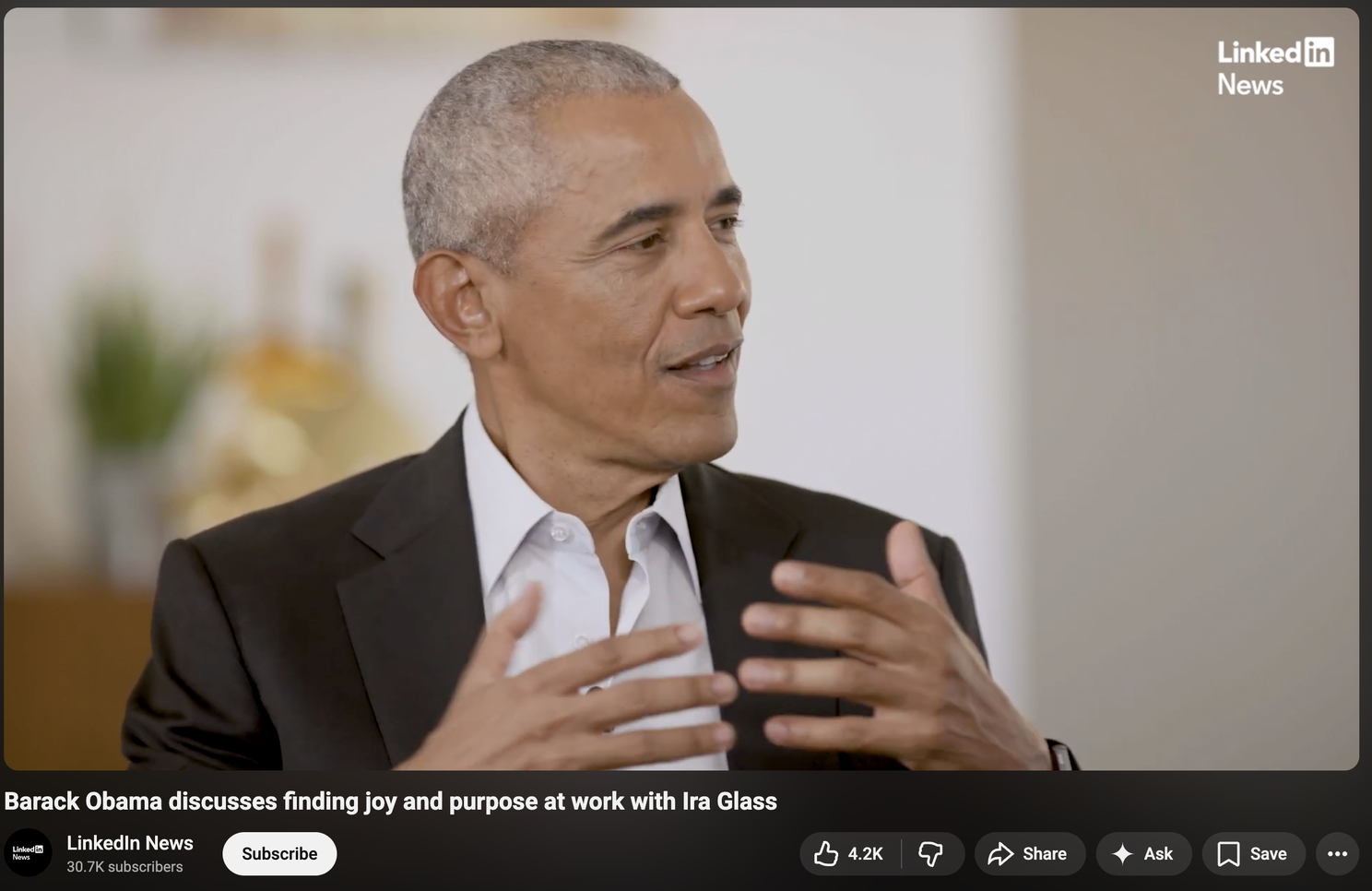
- Hello Monday with Jessi Hempel has featured Megan Rapinoe, Daniel Pink, and Barack Obama
- This Is Working with Editor-in-Chief Daniel Roth has hosted Jamie Dimon, Ray Dalio, and Richard Branson
All produced by LinkedIn. And that is just the owned media portfolio. Now look at what third-party publishers have built on top of it.
The Wall Street Journal's careers newsletter has nearly 3 million weekly subscribers on LinkedIn. CNN's PM Plug-In has 600K. Across the platform, LinkedIn has reported over 938 million total newsletter subscriptions. LinkedIn's own editorial team has publicly noted that the subscriber counts publishers accumulate on LinkedIn often dwarf what they get on their own native newsletters.
Publishers are building their most valuable audiences on LinkedIn's platform.
So what are you supposed to do about it?
This is the part of the article you'll probably want to share or screenshot.
- Merge your content and PR functions into one team. LinkedIn has made content marketing and PR the same activity. The content executives publish is what LinkedIn's editorial team evaluates for selection. There is no separate pitching step. If your content and comms teams operate separately, they are fragmenting a single workflow.
- Reassign budget from legacy earned media infrastructure. Press release distribution, media database subscriptions, and trade pub sponsorships should be evaluated against the cost of funding an executive publishing program on the platform where editorial selection actually happens.
- Study what LinkedIn's editorial team covers in your vertical. Look at Top Perspectives for your industry. Note the topics, the angles, and who gets selected. Use that as the basis for your executive publishing cadence rather than defaulting to your existing content calendar.
- Build a bench of executives, not just your CEO. Each executive or subject matter expert publishing credibly is an additional entry point into LinkedIn's editorial layer, journalist sourcing, and audience reach.
- Send connection requests to journalists, podcast hosts, and LinkedIn's editorial staff. When those people are connected to your executives, your content appears in their feed organically. Every post functions as a passive pitch without requiring outreach.
- Have your executives engage in other people's threads. Commenting on posts from journalists, editors, and industry voices builds name recognition with the people who control editorial selection and press coverage.
- Invest in video content. LinkedIn's Editor-in-Chief has said they are placing bigger bets on video, and that leaders are increasingly coming to LinkedIn to break news and share insights on video directly.
- Use Thought Leader Ads to place key executive posts in front of media professionals. When an executive publishes something with news value, sponsor it as a TLA targeted to journalists and editors in your vertical. It appears as organic content in their feed rather than a press release in their inbox.
- Track editorial selection as a KPI, not just engagement. Measure whether executives are being pulled into Top Perspectives, LinkedIn News features, and editorial roundups. That is the earned media outcome on this platform.
- Repurpose editorial placements into compounding earned media. When an executive gets selected for Top Perspectives or quoted by a journalist who found them on LinkedIn, share it, reference it in future content, and use it in sales materials. Each placement makes the next one more likely.
What it looks like when you get this right
The companies that understand what LinkedIn has become will treat executive content as core infrastructure:
- Your executives have a twelve-month track record of substantive content on the topics that matter in your industry.
- When a major story breaks, LinkedIn's editorial team already knows who your executives are and features them in Top Perspectives alongside the coverage.
- Journalists writing about your industry find your executives on the platform and reach out directly for comment.
- The buyers on your target account list encounter your executives' thinking repeatedly and form a favorable opinion long before a sales conversation happens.
- When you have something to announce, you have a real choice between traditional media and posting directly to an editorial infrastructure that will distribute it at platform scale.
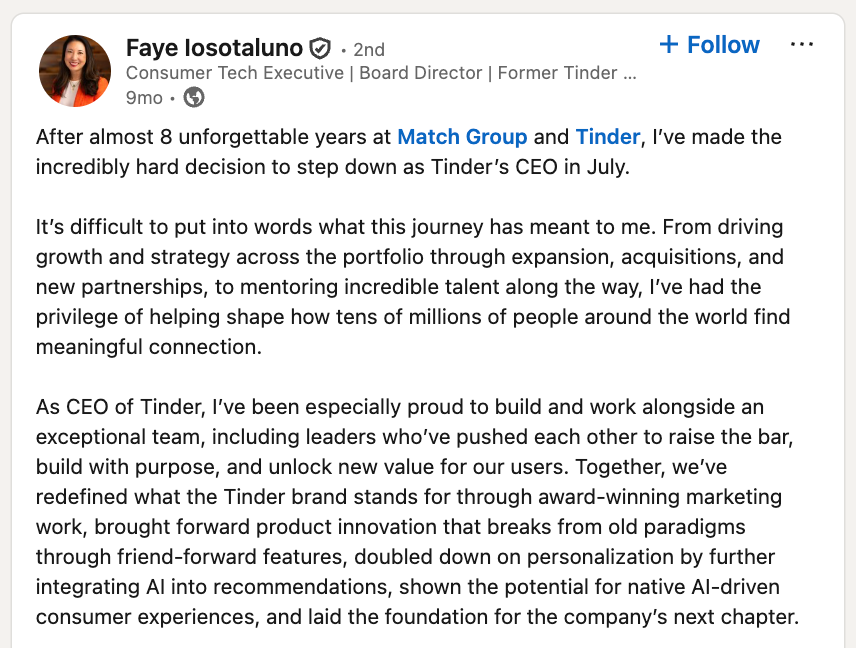
Duolingo shared an all-hands email directly to LinkedIn announcing the company's transition to AI-first, and The Verge, Business Insider, and Tech Times all covered it afterward. Tinder's CEO announced a leadership change on her personal LinkedIn rather than through a press release, and about an hour later Spencer Rascoff responded to her post sharing that he would be taking over leadership of Tinder.
The clearest end-to-end example is when Nasdaq President Tal Cohen announced the exchange's plans to move to 24-hour trading. That is huge global news, and there was no press release, no embargo, and no advance briefing to reporters outside of LinkedIn's editorial team. Nearly 60 media outlets covered the story, and Bloomberg, Fast Company, and Reuters all cited his LinkedIn post as the primary source.
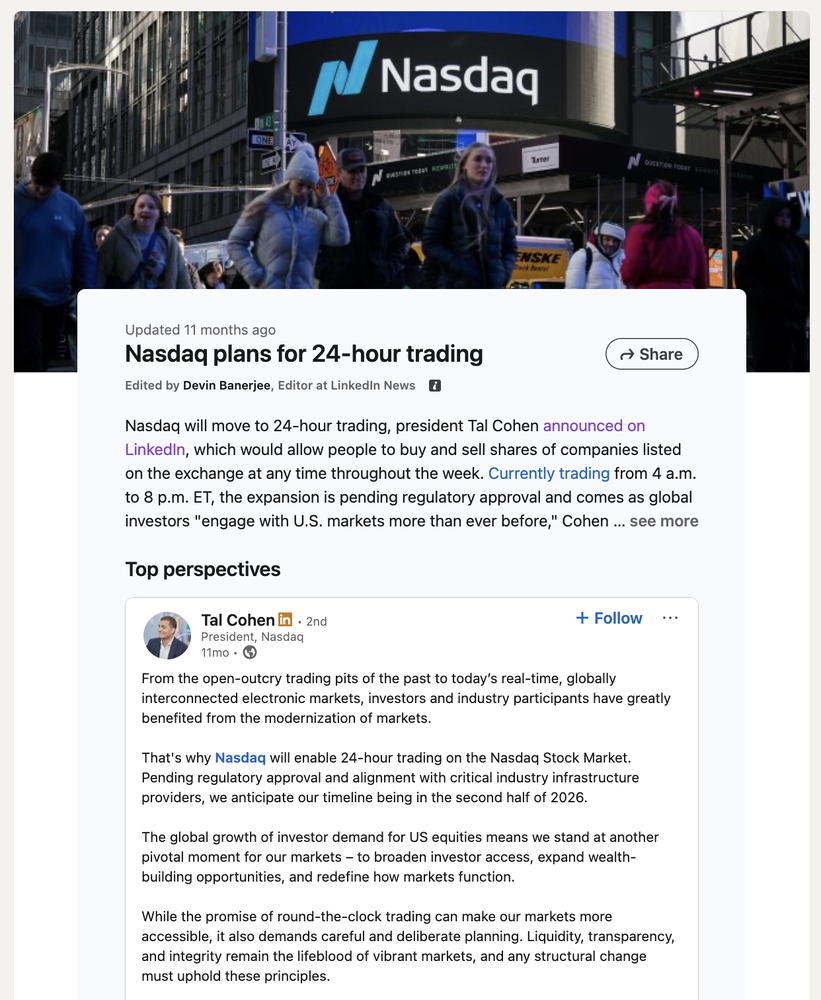
The post was the news, and LinkedIn was essentially the wire service.
Adjacent reading: how the LinkedIn algorithm really works and, if you are hiring for it, how to choose a LinkedIn agency.
Questions
Frequently asked questions
- Why did LinkedIn add games like Queens and Pinpoint?
- The games build a daily return habit and sit directly beneath LinkedIn News, the same way a newspaper crossword sits beside the headlines. They support LinkedIn's push to become the daily destination for professional news.
- Is LinkedIn a media company?
- Increasingly, yes. LinkedIn runs an editorial team of more than 250 journalists, partners with hundreds of publishers, and curates a news feed that overrides algorithmic distribution.
A weekly newsletter is coming
Garret’s original thinking on attention, credibility and distribution. Email signup is being updated.
About the newsletterWork with us
Ready to dominate LinkedIn?
Influent builds and runs executive LinkedIn programs for category-leading B2B companies.