August 14, 2026 · 9 min read
The Thought Leader Ads playbook: our full post amplification strategy
This is the strategy deck we walk clients through, written out. What Thought Leader Ads are, why organic alone cannot reach your buyers, and how we target, measure, and activate them.
Garret Caudle, Founder, Influent
Short answer
Thought Leader Ads promote a person's organic post as an ad from their profile. They let you put an executive's best-performing content in front of a named target account list, which organic reach alone cannot do, and they consistently outperform brand-account creative.
Key takeaways
- Only 2 to 8% of organic LinkedIn impressions reach your ICP, because distribution follows your network graph, not the topic.
- Thought Leader Ads let a company sponsor an individual's organic post, so 100% of paid impressions hit the audience you defined.
- TLAs average 6x the click-through rate and 77% lower cost per click versus standard LinkedIn ads.
- Boost only posts that name the buyer, frame a felt problem, offer a point of view, and earn a save or share.
- Measure ICP engagements, not impressions. Our benchmark is 10 to 15 net-new ICP engagements per $500 spent.
Most executive LinkedIn programs stop at the post. Someone writes something good, it goes out, it collects a few hundred impressions from colleagues and recruiters, and everyone agrees it was a nice post.
The problem is not the writing. The problem is distribution. This is the amplification half of the system we run, written out the way we present it: why we run paid behind organic posts, what a Thought Leader Ad actually is, how we target and measure them, and what we do with the engagement once it exists.
Only 2 to 8% of your organic impressions reach your ICP
Just because you post about a topic does not mean LinkedIn will show it to people who care about that topic. Your post goes to your network first, and only if that network engages does it spread outward through degrees of separation.
On average, only 2 to 8% of your impressions reach your ideal customer profile. That makes it nearly impossible to get in front of new buyers, no matter how good the content is. You are not fighting quality. You are fighting a network graph that was never built to deliver your post to a stranger who happens to be your perfect buyer.
Thought Leader Ads bypass the graph entirely. Instead of hoping content spreads through connections, you serve it directly, so 100% of the paid impressions go to the audience you defined. The standard LinkedIn audience tools all apply: company-list targeting, job titles, seniority filters. The post is shown to the exact people it was written for.
So what is a Thought Leader Ad?
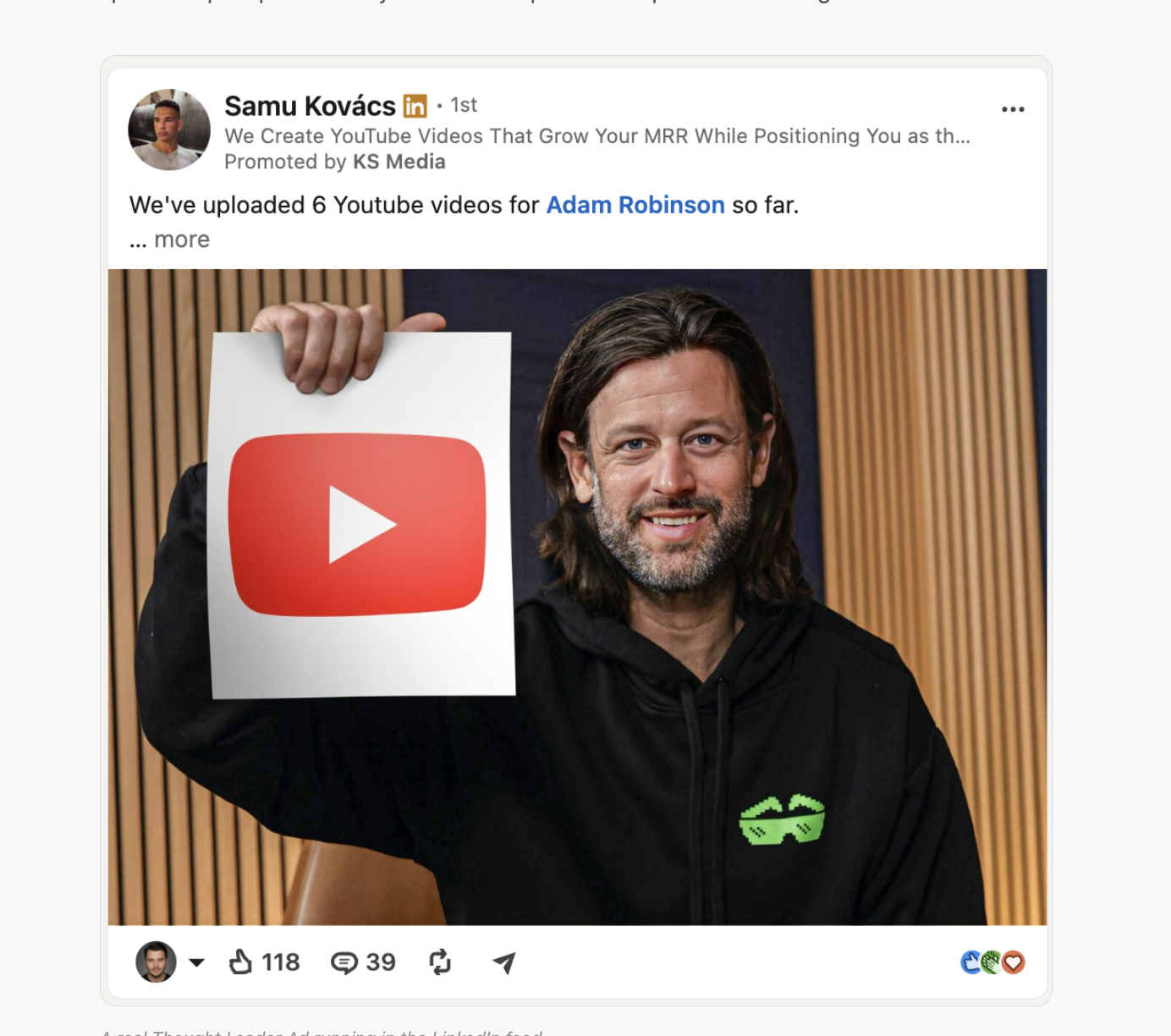
A Thought Leader Ad (TLA) is a LinkedIn ad format, launched in 2023, that lets a company sponsor a post published by an individual person and push it into a target audience's feed.
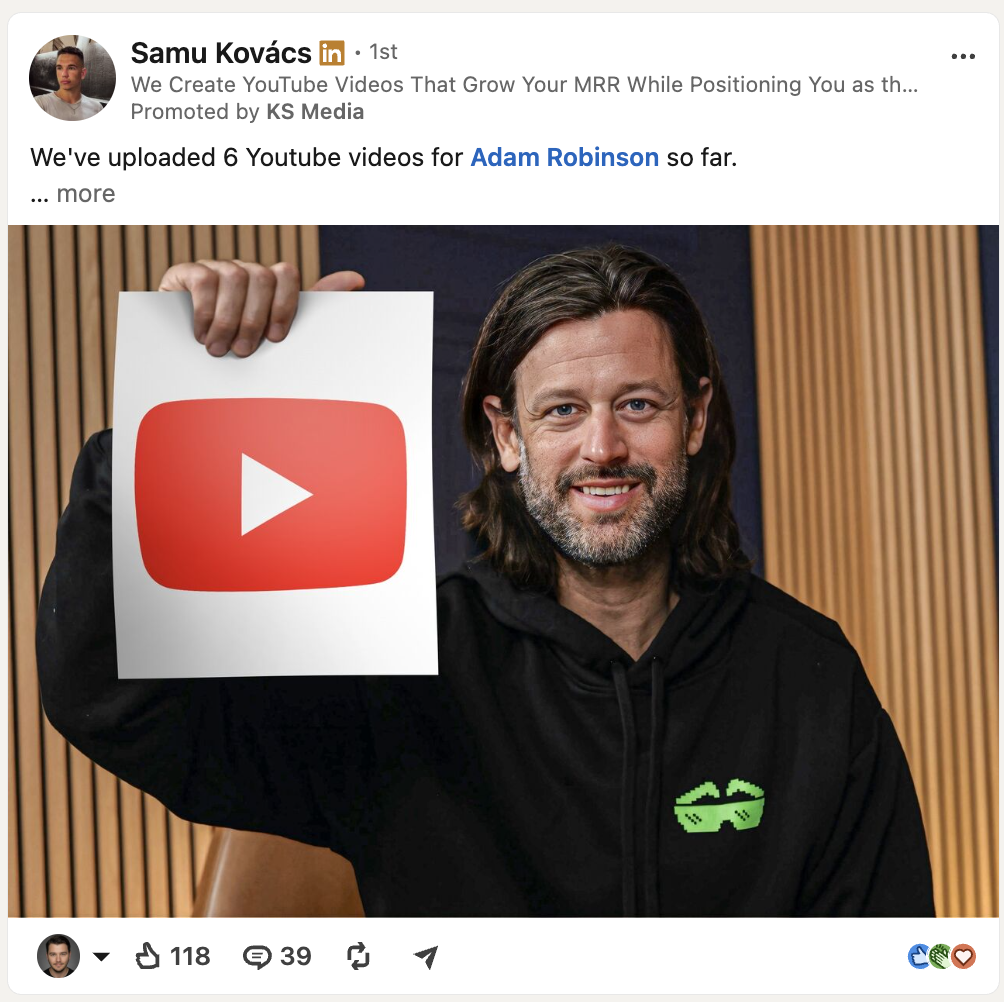
Three things matter about how they work:
- The creative is a real organic post. It appears under the person's name and photo, in their voice, in the feed, with a small "promoted by" label. Any format works: text, image, video, document.
- Engagement is real post engagement. Likes, comments, and reshares accrue to the actual post on that person's profile and feed the organic algorithm the same way any other engagement does.
- The person can be anyone who grants permission. Executives, employees, or people outside the company, as long as they approve the sponsorship. Campaigns run through Campaign Manager on the company's ad account, and you can retroactively promote any post, with no time limit.
And they outperform standard ads across every metric
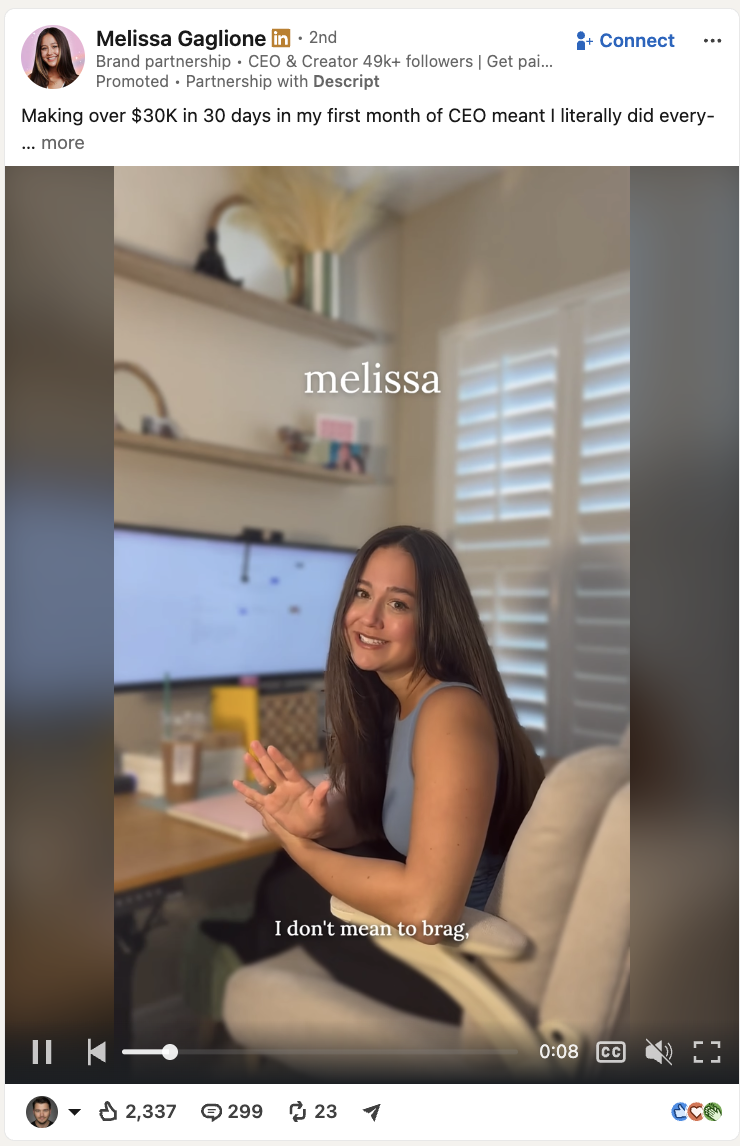
Because the creative is a real post from a real person, buyers read it as content rather than as an ad. Compared to standard LinkedIn ad formats, TLAs average:
| Metric | vs. standard ads |
|---|---|
| Click-through rate | 6x higher |
| Cost per click | 77% cheaper |
| Engagement rate | 2 to 3x higher |
| Total clicks at equal spend | 4.6x more |
6x
Higher click-through rate than standard ads
77%
Cheaper cost per click
2 to 8%
Of organic impressions that reach your ICP
What makes a good Thought Leader Ad
Not every good organic post deserves paid spend. Every post we boost has to do four things. If one is missing, we do not put money behind it.
- Names the buyer in line one. The first line calls out who the post is for, so the right person stops scrolling and the wrong person keeps moving.
- Frames a problem they already feel. A specific pain the buyer is living with, in their language, not yours.
- Offers a point of view, not a pitch. A clear stance or a framework that is useful even if they never talk to you.
- Earns a save, share, or reply. Built to be forwarded to a peer or saved for later, which is the engagement signal that actually correlates with buying interest.
With TLAs, the hook matters even more
You are reaching complete strangers. A strong hook immediately tells your ICP that the post is for them, which means doing two things at once: name the audience directly with an identity signifier (title, company type, role signal) and name a topic they care about.
Value-additive content beats hot takes
Content that teaches something, hands over a framework, or makes the reader look smart to their team consistently outperforms hot takes and anecdotes, because the engagement bar is lower. A useful post does not require public endorsement, it just needs to be worth passing along.
Only a small share of people will publicly like or endorse a point of view. Private actions like saving and sharing happen far more often, and they signal genuine interest from buyers who are not ready to raise their hand.
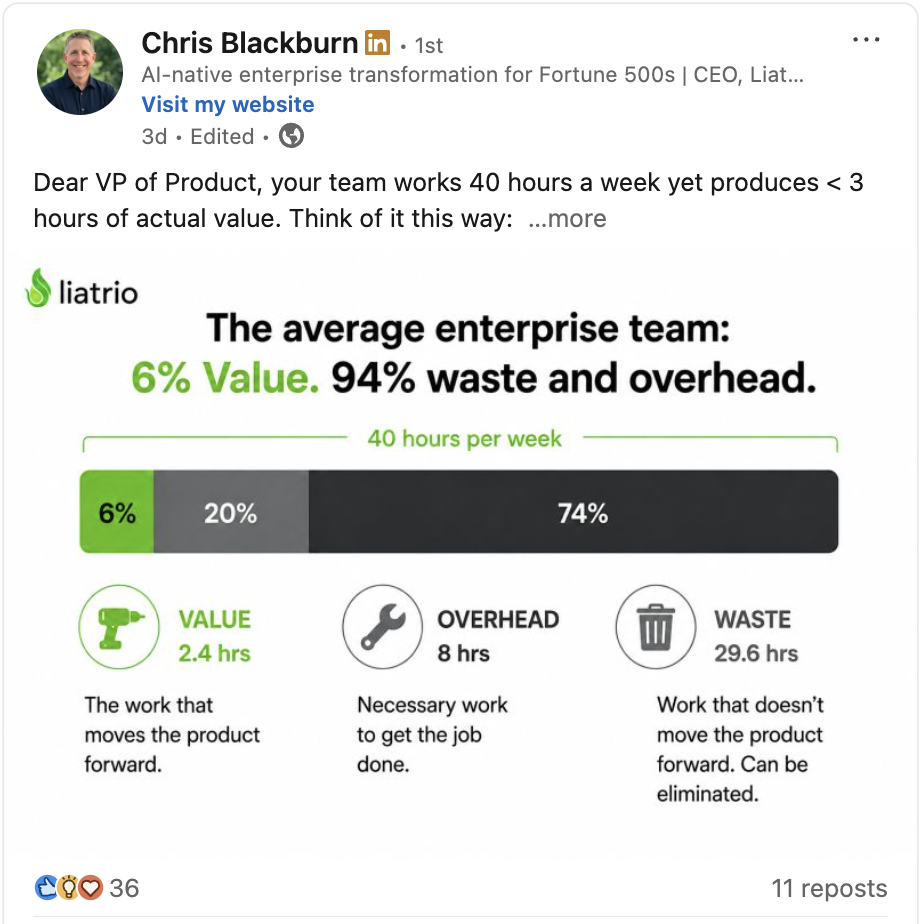
Two examples
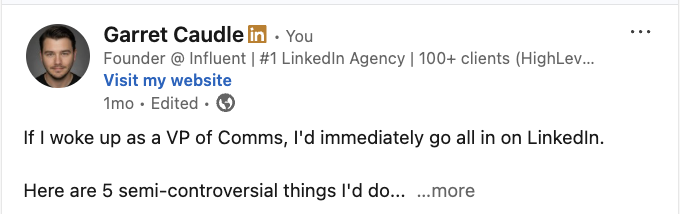
"If I woke up as a VP of Marketing, I'd go all in on Reddit." Names the buyer in line one, then gives five specific, semi-controversial moves, numbered. Save-worthy by design.
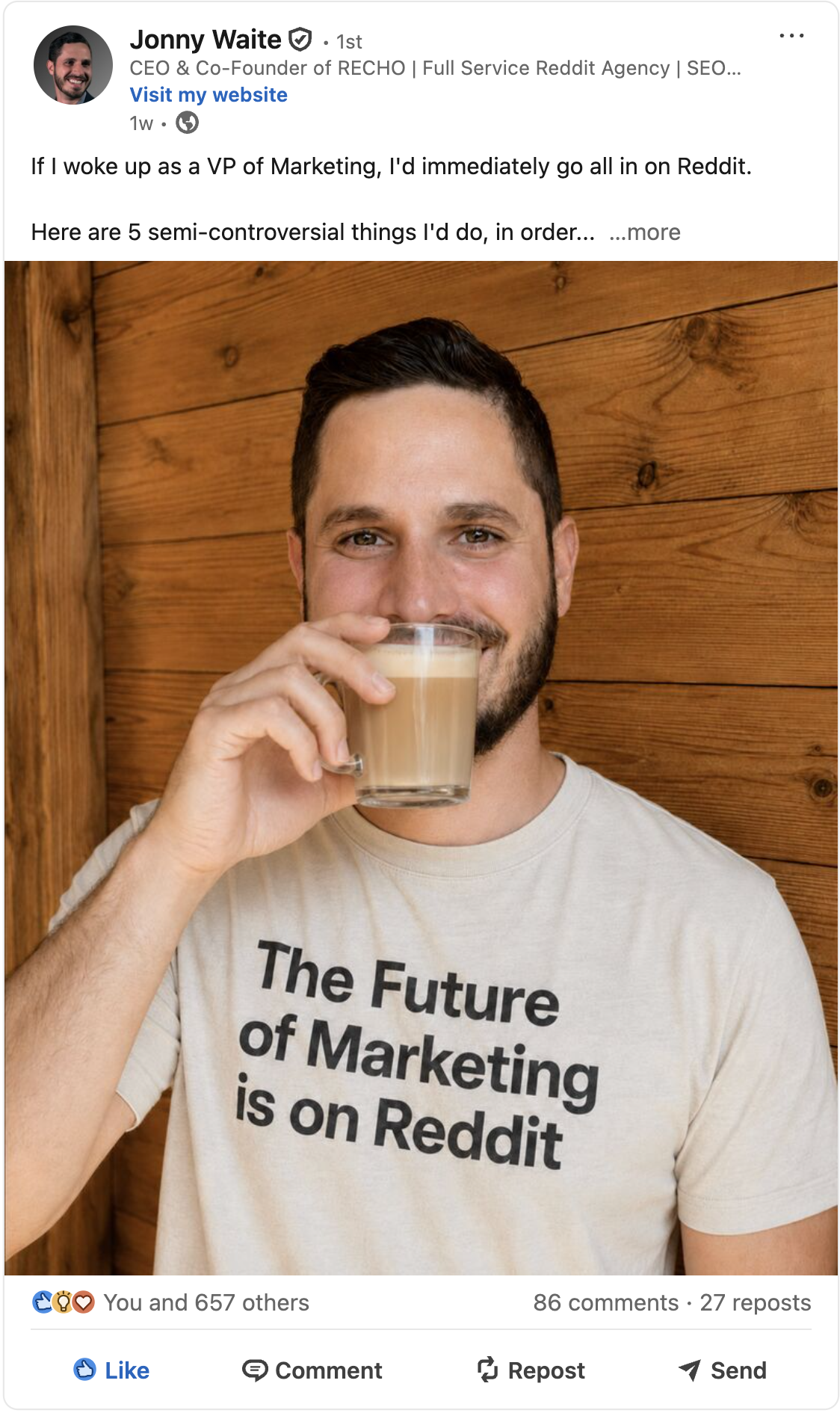
| Result | Number |
|---|---|
| ICP engagements | 204 |
| Website visits | 66 |
| Inbound leads | 12 |
"If you work in PR, spend 20 minutes on this article." Names the audience in line one, points to exactly one thing to read, and argues a real position: that LinkedIn is becoming a media platform.
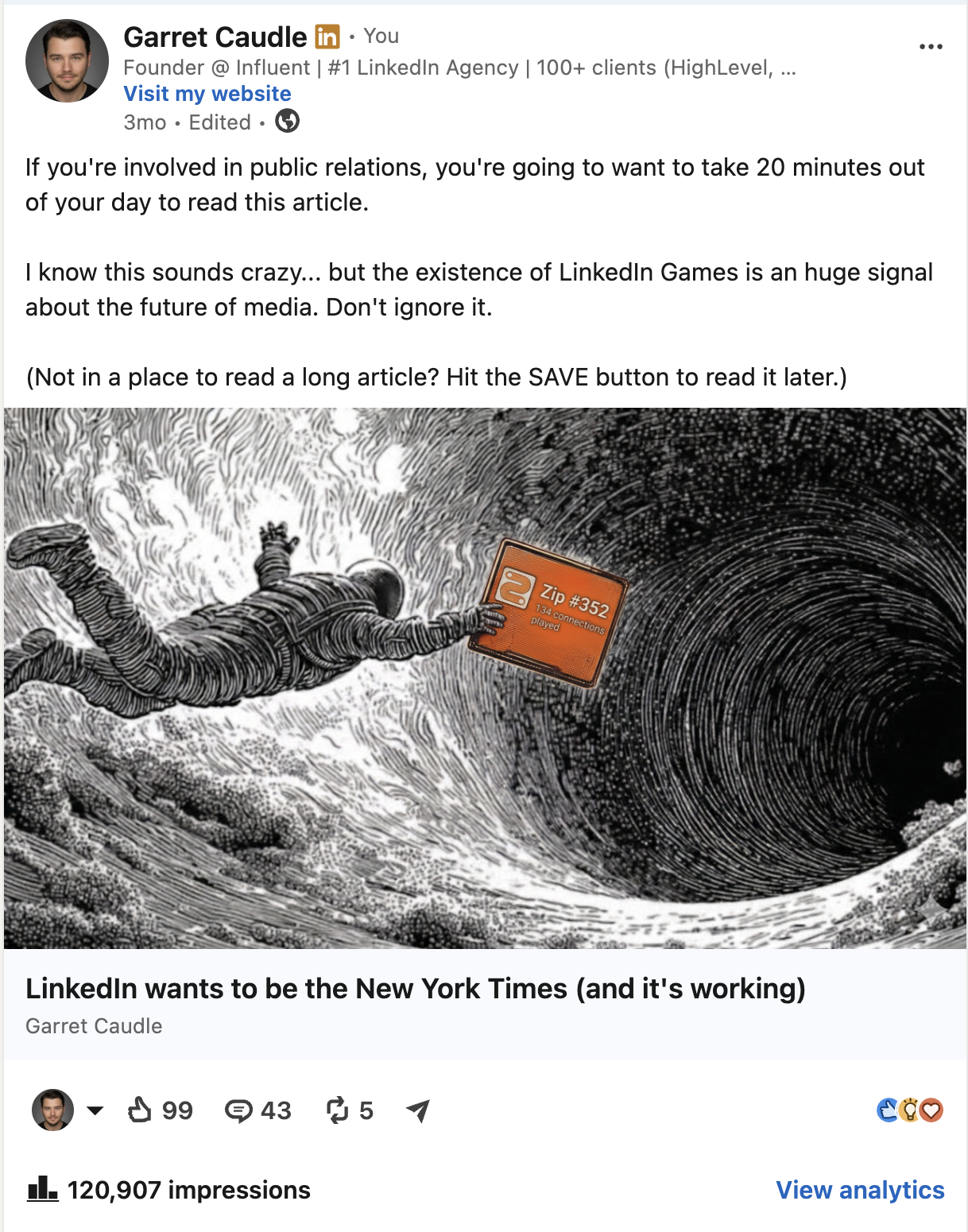
| Result | Number |
|---|---|
| Impressions | 120K |
| Reactions | 99 |
| Comments | 43 |
| ICP engagements | 45 |
Three target audiences
We start with the named accounts you want to reach, then let real engagement compound spend efficiency over time.
- Approved target account list. We launch against the named buyers you approve and serve ads directly to them. No broad interest targeting.
- Lookalikes from real ICP engagement. As posts collect reactions and comments from real buyers, we build lookalikes off those engagers to find more of the same person, more efficiently.
- Retargeting previous ICP engagers. Once there are roughly 300 ICP engagers in the pool, evergreen campaigns resurface your best posts to buyers who already raised their hand.
How we measure success
Ad reporting pulls everyone toward CTR, clicks, and impressions. We read those as diagnostics, not as the score. The score is whether a qualified buyer inside your target profile engaged with the post: a public reaction, a comment, or a share from someone who matches the profile.
The benchmark we hold ourselves to is 10 to 15 net-new ICP engagements per $500 spent. We keep it conservative so it stays honest. Paid engagement also triggers the organic algorithm, so the real number is usually higher, but we leave that second wave out of the benchmark rather than take credit for it.
Turning engagement into pipeline
None of this matters if the engagement sits in Campaign Manager. We built Fluentcy to capture, qualify, and activate it in one place:
- Capture. Every engagement on the post, collected as it happens.
- Enrich. Title and company details added for each engager.
- Filter. Our scoring model rates person fit and company fit.
- Activate. ICP profiles get queued into a messaging workflow in one click.
- Inform. The data tells us which posts deserve paid spend next.
That last step is the loop that makes the whole thing compound. Paid distribution tells you which posts your buyers actually respond to, which improves the next round of content, which makes the next round of spend more efficient.
If you want this run for your executives, book a call or read how we connect LinkedIn activity to pipeline.
Questions
Frequently asked questions
- What is a LinkedIn Thought Leader Ad?
- A Thought Leader Ad is a LinkedIn ad format that lets a company sponsor an organic post published by an individual person, so it appears in a targeted audience's feed under that person's name and photo with a promoted-by label.
- Do Thought Leader Ads perform better than standard LinkedIn ads?
- On average they do. Across accounts, TLAs see roughly 6x higher click-through rates, 77% lower cost per click, 2 to 3x higher engagement rates, and 4.6x more clicks at equal spend, because buyers read them as content rather than as ads.
- Does engagement on a Thought Leader Ad count toward the organic post?
- Yes. Likes, comments, and reshares accrue to the real post on the person's profile and feed the organic algorithm, so paid distribution often triggers a second wave of organic reach.
- How should you measure Thought Leader Ads?
- Measure engagements from people who match your ideal customer profile, not impressions or clicks. A reasonable conservative benchmark is 10 to 15 net-new ICP engagements per $500 of spend.
- Whose posts can a company promote?
- Anyone who grants permission, including executives, employees, and people outside the company. Campaigns run in Campaign Manager on the company's ad account, and any past post can be promoted with no time limit.
A weekly newsletter is coming
Garret’s original thinking on attention, credibility and distribution. Email signup is being updated.
About the newsletterWork with us
Ready to dominate LinkedIn?
Influent builds and runs executive LinkedIn programs for category-leading B2B companies.